

Before superheroes soared across movie screens and comic shops became weekend destinations, comic books were simple, silly, and mostly harmless. Early titles featured slapstick duos like Mutt and Jeff or wholesome icons like Mickey Mouse. They were light entertainment printed cheaply on pulp paper, meant to be read, traded, and forgotten.
But by the mid‑1930s, comics were changing. Adventure strips like Dick Tracy and Flash Gordon introduced danger, crime, and cliffhangers. Then, in 1938, Superman arrived and changed everything. Suddenly comics were not just funny. They were thrilling, dramatic, and sometimes a little violent. To many readers, this was exciting. To others, it was alarming.
And soon, comic books would become the center of one of the biggest moral panics in American pop‑culture history.
The First Wave of Criticism
In 1940, Chicago Daily News literary editor Sterling North published a blistering editorial accusing comic books of corrupting children. He called them poorly drawn, poorly written, and harmful to young minds. He warned that their lurid colors and sensational stories would create a generation “more ferocious than the present one.”
It was the kind of argument that would later be used against television, rock music, video games, and social media. But in 1940, comics were the new villain.
Despite the criticism, comics exploded in popularity during World War II. Superman, Batman, Captain America, and dozens of other heroes filled newsstands. At their peak, comic books sold an astonishing 60 million copies a month. Kids devoured them. Adults worried about them. And one man in particular believed comics were doing real harm.
Enter Dr. Frederic Wertham
Dr. Frederic Wertham was a German‑born psychiatrist with a respected career. He had advocated for considering a patient’s environment in treatment and had spoken out against school segregation. His research even contributed to the landmark Brown v. Board of Education decision.
But Wertham also worked closely with troubled teenagers, and he noticed many of them read comic books. To him, this was not coincidence. He believed comics were fueling delinquency, violence, and moral decay. In 1948, he told a psychiatric convention that comic books were creating a new class of juvenile criminals.
The media loved him.
By the late 1940s, magazines like Time and Look were publishing stories about the “degeneration” of comics. Some towns held public comic‑book burnings. Others passed local censorship laws. Canada even banned “crime comics” outright.
In 1950, the U.S. Senate launched an investigation into the link between comic books and organized crime. It was the beginning of a national panic.
Seduction of the Innocent and the Senate Hearings
Wertham’s 1954 book Seduction of the Innocent poured gasoline on the fire. He argued that Batman and Robin promoted homosexuality, that Wonder Woman encouraged rebellion against traditional gender roles, and that Superman inspired dangerous fantasies. But his harshest criticism targeted the new wave of horror and crime comics, especially those published by William Gaines at EC Comics.
EC’s titles like Tales from the Crypt and The Vault of Horror were graphic, shocking, and wildly popular. They were also the perfect target for Wertham’s crusade.
When the Senate Subcommittee on Juvenile Delinquency held hearings in 1954, Wertham was the star witness. Gaines, the only major publisher to testify, defended his work but stumbled badly under questioning. A now‑famous exchange about a decapitation cover made Gaines look reckless, and the industry’s reputation collapsed almost overnight.
The Comics Code Authority
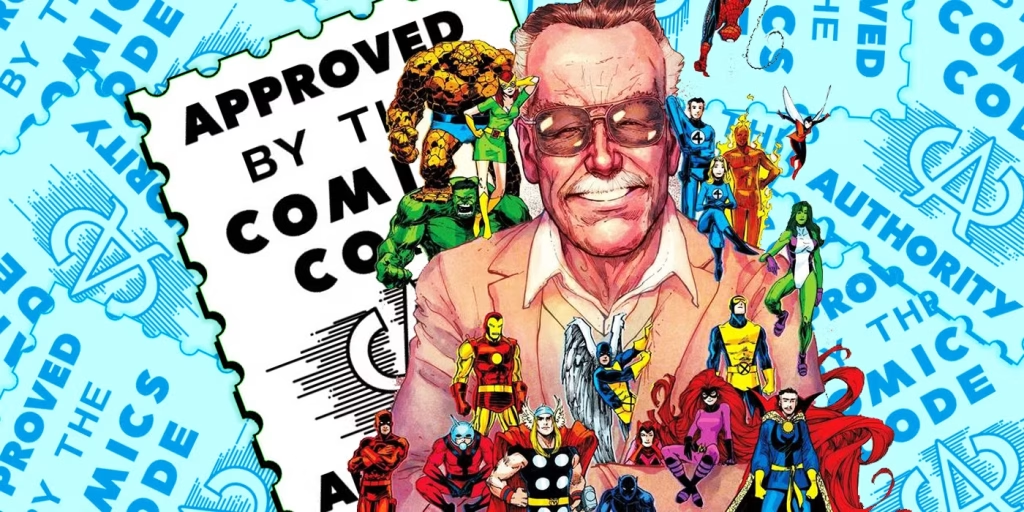
Fearing government regulation, publishers created a strict self‑censorship system called the Comics Code Authority. Its seal appeared on the covers of approved comics and signaled that the content was “safe” for children. The Code banned excessive violence, sexual content, slang, disrespect toward authority, and even the word “horror.”
Many publishers folded. EC Comics was nearly wiped out. Marvel (then Atlas) barely survived. DC shrank dramatically.
But Gaines managed one clever escape. He kept a single publication alive by turning it into a magazine rather than a comic book. Magazines were not subject to the Code.
That publication was Mad Magazine.
The Silver Age and Beyond
By the 1960s, the comic industry slowly recovered. New heroes like Spider‑Man, the Fantastic Four, and the Justice League ushered in the Silver Age. The Comics Code seal remained on covers for decades, though its influence faded over time.
Wertham continued speaking against comics into the 1970s. When he appeared at a comic convention in 1973, fans booed him off the stage. Many blamed him for nearly destroying the medium they loved. He died in 1981, long before comics became the cultural powerhouse they are today.
The Legacy of a Panic
Today, comics have entered what many call the Platinum Age. Graphic novels win literary awards. Superheroes dominate the box office. And the Comics Code Authority, once feared, is now a relic. Only a few titles ever carried its seal in the modern era, and even those eventually abandoned it.
Looking back, the comic‑book panic of the 1950s feels familiar. Every generation finds a new form of entertainment to worry about. But the story of Wertham, Gaines, and the Comics Code remains one of the most dramatic examples of how pop culture can become a battleground for bigger fears.
And in the end, comics survived. They always do.
Be the first to comment